
Uğurlu-Zeytinlik Höyük is located on the southwestern part of Gökçeada, the largest island of Türkiye, approximately 1 km north of Uğurlu Village. Situated on the slopes of Doğanlı Hill, the mound has the appearance of a hillside settlement and measures approximately 250 × 200 meters. An asphalt road connecting Uğurlu Village with the town center of Gökçeada passes directly through the middle of the site. First identified in 1998, the mound has been excavated since 2009 by a team led by Prof. Dr. Burçin Erdoğu on behalf of Akdeniz University, under the authorization of the General Directorate of Cultural Heritage and Museums of the Ministry of Culture and Tourism.
As the earliest known Neolithic settlement in the Eastern Aegean Islands, Uğurlu-Zeytinlik Höyük occupies a key position for understanding both the origins of the Neolithic way of life in Europe and the relationships among the Aegean Islands, Anatolia, and the Balkans during the Neolithic and Chalcolithic periods. The site therefore provides crucial evidence for reconstructing cultural interactions and population movements across the wider Aegean region.
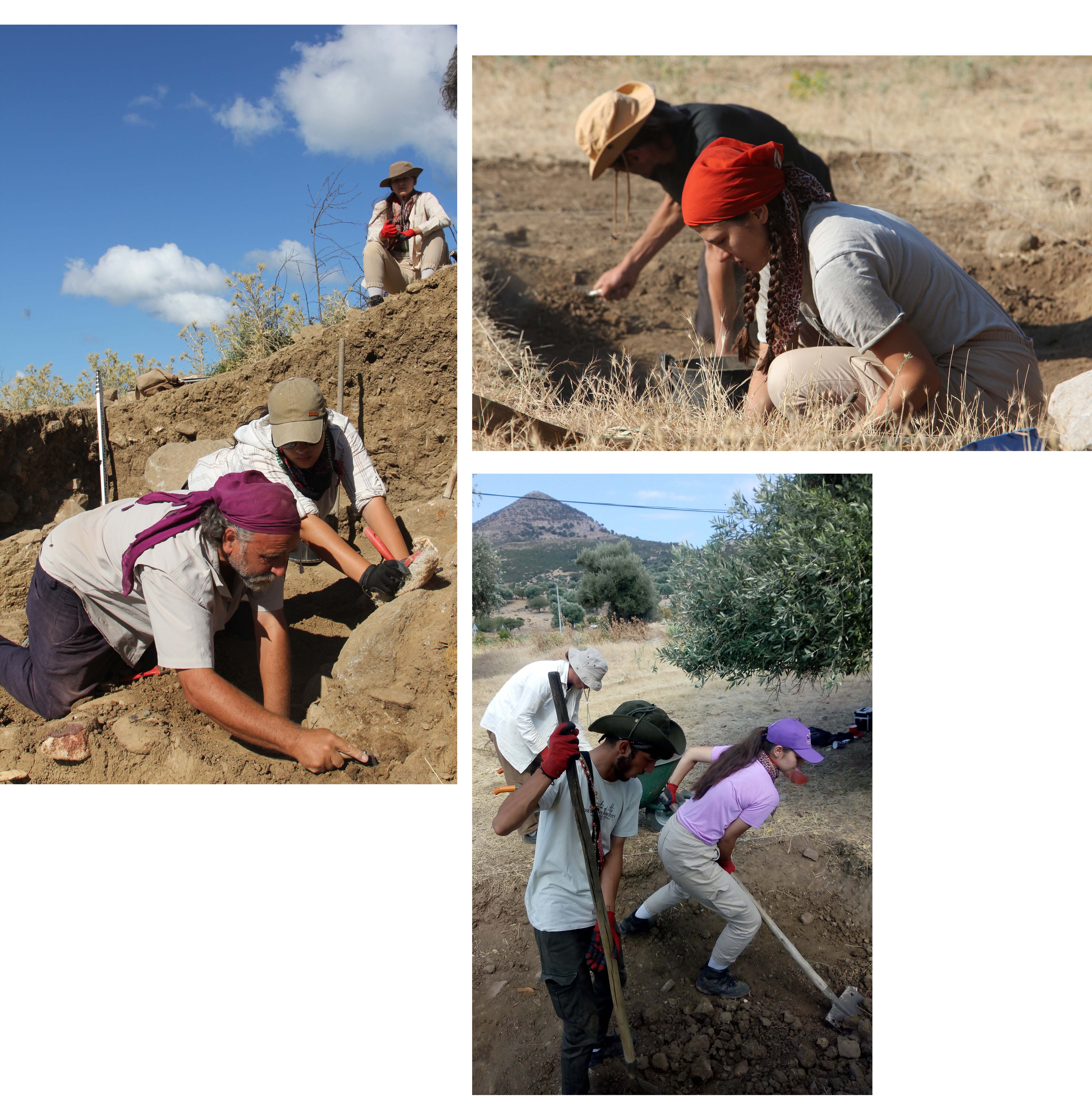
Following the preparation of a detailed topographic survey of the mound during the 2009 excavation season, a systematic surface collection was carried out within a grid system of 10 × 10 m squares. Based on the distribution of archaeological materials, two test trenches were opened on the eastern and western sides of the mound. Beginning with the 2010 excavation season, large-scale excavations and geophysical surveys were initiated. In addition, auger coring was conducted at three different locations on the island for pollen analysis in an effort to obtain data on prehistoric vegetation and climatic conditions. Parallel to the fieldwork, laboratory studies have been undertaken to investigate aspects of daily life, subsistence economy, technology, and exchange networks.
The settlement of Uğurlu-Zeytinlik is located in the southwestern part of Gökçeada, approximately 1 km north of Uğurlu Village (Fig. 1). Dating to approximately 8,800 years before present, it represents the earliest known settlement in the Eastern Aegean Islands. Excavations conducted at the 250 × 200 m site have revealed the presence of six cultural layers. The earliest, Cultural Layer VI, dates to the Aceramic Neolithic period between 6800 and 6600 BC. The first pottery appeared at the settlement around 6600 BC. Cultural Layer V is dated to 6500–5900 BC, while Cultural Layer IV, representing the final phase of the Neolithic period, dates to 5900–5500 BC. Cultural Layer III reflects the transitional process between the Neolithic and Chalcolithic periods and is dated to 5500–4900 BC. The latest cultural layer identified at the site, Cultural Layer II, dates to 4500–4300 BC.
Son güncelleme : 9.06.2026 13:10:38